Showing posts with label Hanoi. Show all posts

Destinations lure tourists in Hanoi

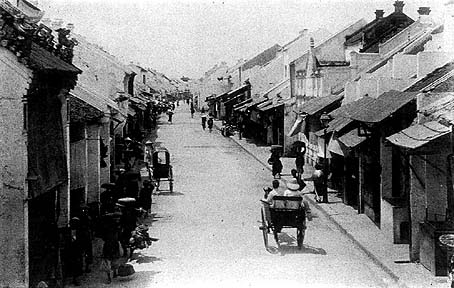
Hanoi, is a major city in Vietnam has many interesting tourist attractions to visit. In contrast to Ho Chi Minh City with a strong a touch of French architecture, Hanoi as the capital of Vietnam presents a different view. Chinese architecture is very dominant influence felt and the old town that never die, especially the Old Quarter.
Here are best tourist attractions in Hanoi, Vietnam:

1. Ho Chi Minh Mausoleum


In this place jazad Ho Chi Minh, Vietnam hero as well as former presidents preserved and stored in a glass coffin. Near this place, there is a simple house made ​​of wood, the place where Ho Chi Minh once lived in his lifetime. Even when elected president, he still chose to stay at home rather than simply move to the presidential palace. Today, the former home of Ho Chi Minh City is used as a museum.
 
2. Museum of Ethnography


Want to know more about the culture of Vietnam. Visit the ethnographic museum that has a diverse collection of more than 50 tribes living in this country.
 
3. Temple of Literature

This place is the main destination for tourists who visit Hanoi. Therefore, try to come up in the morning (this place is open from 08.00 hours in the morning) to avoid long lines.
 
4. The Municipal Water Puppet Theatre

In this place a kind of puppet artistry demonstrated that we know in Indonesia. Interestingly, the show is done under the water surface. Curious, is not it? Try this out!
 
5. Ba Dinh District

In this place was anciently an Imperial Palace, but many of the parts of the building that have been destroyed either caused by age and become 'victims' at the time of the Vietnam war in the past. However, the remains of the beauty of the building pagodas, temples, large gardens and beautiful and important monuments with Vietnam tourism.
 
6. Old Quarter

The street is also called '36 ', Atmosphere The Old Quarter is always alive, bustling with motorcycles passing by, shops and street traders, and do not miss the tourists from all over the world. Explore the area filled with house which is known as tunnel houses, tunnel houses because it is narrow and elongated shape into.
 
7. Municipal theater
This place formerly known as the French Opera House, where the style of the building is deliberately similar to the Opera Garnier in Paris with the pillars of a la Greece, but in a smaller scale. Until now that is still well-maintained building is still used for opera performances as well as other large-scale art performances.
thetouristattractions
 

Discover Hanoi - Vietnam's capital

Hanoi, Vietnam’s capital is a really beautiful city. Its beauty stands out with ancient and pensive features, and is mixed with lasting cultural and historical marks. Hanoi is beautiful, by the beauty of its elegant people, and by the beauty of its refined spirits.
A Thousand Years of Culture...
Hanoi has an elegance, a grace, unlike any other city in Asia. It is a stately capital, an old grande dame whose worn beauty hints at untold stories - a secret past. It is a city that invites nostalgia, just as it invites questions - who else has stopped beneath this spreading banyan tree? Who once live in that proud colonial villa? Who lives there now?
In the wide, tree-lined boulevards of the French Quarter, the past is palpable. History clings to the sun-drenched walls like moss.


But the fine colonial mansions are but one layer of history. Strolling around the little lake in the heart of Hanoi, where legends grow thicker than water lilies, you will get a sense of the city's true cultural depth.
One myth tells of a golden turtle, which rose from the lake's green depths to present Vietnam's King with a magical sword, used to repel northern invaders in the 15th century! 


Hanoi's position as Vietnam's capital, when Emperor Ly Thai To established the court of Thang Long (Ascending Dragon) on this site.
Over the centuries the city's name changed several times, until Emperor Tu Duc christened it Hanoi (City in a bend of the River) in 1831. Then, from 1902 to 1953, Hanoi was the capital of French Indochina.
Vietnam's long struggle for independence and its birth as a socialist state are commemorated in many of the city's museums and monuments, the most famous which is President Ho Chi Minh's imposing stone mausoleum. 

Hanoi ancient town, Vietnam
In the Old Quarter Hanoi’s rich past comes to life. Stroll down the ancient guild streets, where the wares on offer have remained unchanged for centuries: traditional medicines and herbs, brightly coloured votive paper, bolts of finely spun silk, silver and jade jewellery. 
Ten centuries of culture and commerce are layered like paint, creating a vibrant mural past and present. Here you will see the life of Hanoi: the women had pad past with baskets of bread perched on their heads; the flower vendors wheeling bicycles festooned with fresh-cut roses, mums and lilies, the brown-robed monks on their way to the pagoda.


As well as bring Vietnam’s political centre, Hanoi has long been the country’s artistic and cultural heart.  Visitors can explore the peaceful grounds and pavilions of the Temple of Literature, an ancient university where the first scholars enrolled in 1070.
Today, the city’s aura of culture continues to draw intellectuals and artists. Dozens of galleries showcase the fruits of a flourishing contemporary art scene.


This creative legacy is not surprising, given that Hanoi invites quiet contemplation. With its shady lakes and countless street-sides cafes, the city tempts you to linger over a cup of thick Vietnamese coffee and watch the world go by. 
Spend some time in Hanoi and you too will fall under its languid spell. Hanoi’s cloistered beauty hides Vietnam’s ancient soul.
Source: Internet

Dong Mo Tourist Resort - Hanoi

Location: At the foot of Ba Vi Mountain in Son Dong Commune, Son Tay Town, Ha Noi, 50km from Hanoi City. 
Characteristics: With a total area of 1,300ha, Dong Mo Tourist Resort is an ideal site for camping, Sunday picnics, or vacations.  

Dong Mo Lake has long supplied water for the whole Son Tay area. More than 20 islands emerge from the lake. There is an international 36-hole golf course in King Island. Pretty villas partially hidden in the woods mirrored in the transparent water of the lake. Easily reached from Hanoi, Dong Mo Resort is an ideal place to escape from town and relax in a slow ? paced environment.  

Ho Chi Minh’s Mausoleum in Hanoi

Construction on the Ho Chi Minh Mausoleum began on September 2, 1973 and the structure was formally inaugurated on August 29, 1975.

The Ho Chi Minh Mausoleum (Vietnamese: Lăng Chủ tịch Hồ Chí Minh) is located in the center of Ba Ðình Square where Ho Chi Minh read the Declaration of Independence on September 2, 1945 - establishing the Democratic Republic of Vietnam. While the mausoleum’s design was inspired by Lenin's Mausoleum in Moscow, it incorporates distinct Vietnamese architectural elements such as a sloping roof.


The exterior of Ho Chi Minh’s Mausoleum is made of gray granite, while gray, black, and red polished stone is used in the interior. The mausoleum's portico has the words "Chủ tịch Hồ Chí Minh" inscribed across it, which translates as "President Ho Chi Minh."
Hanoi Ho Chi Minh Mausoleum
In his will, Ho Chi Minh had express a wish to be cremated and to have his ashes scattered across the hills of north, central and southern Vietnam. Nevertheless, the mausoleum was built in spite of his wishes.
Hanoi Ho Chi Minh Mausoleum (2)
The structure itself is 21.6 meters high and 41.2 meters wide and its flanked by two platforms with seven steps for parade viewing. The plaza in front of the mausoleum is divided into 240 green squares separated by pathways while the gardens surrounding it have nearly 250 different species of plants and flowers from all different regions of Vietnam.
Hanoi Ho Chi Minh Mausoleum (4)
Inside the Ho Chi Minh Mausoleum, Ho Chi Minh's body is preserved in a glass case that lies in the cooled, central hall where there a military honor guard is present. 
 Hanoi Ho Chi Minh Mausoleum (5)
 Hanoi Ho Chi Minh Mausoleum (6)
 Hanoi Ho Chi Minh Mausoleum (8)
 Hanoi Ho Chi Minh Mausoleum (10)

Source: vietnamwartravels


Trieu Khuc village's festival - Hanoi

Located about 8 km from the centre of the capital city of Hanoi, Trieu Khuc Village launches its spring festival on the 9 th day of the first lunar month of each year.
The focal points of Trieu Khuc Village’s festival are the two communal houses, i.e. Dinh Sac and Dinh Dai, the former housing the imperial honours conferred on the village genie by different dynasties and the latter, a little bigger, being the place of worshipping Bo Cai Dai Vuong Phung Hung as the titulary genie (the 8th century).

The Trieu Khuc Festival is held on the 9th to the 11th days of the first lunar month of the year. On the 9th day, the villagers solemnly gather at Dinh Sac to celebrate the ceremony of “Nhap Tich” (Naturalization), praying for permission to launch the festival from Bo Cai Dai Vuong. The procession parades from Dinh Sac to Dinh Dai, with a palanquin demonstrating the imperial robe of Emperor Phung Hung.
The rituals that take place at Dinh Dai are called “Te Hoan Cung”. The participants all wear attires made from the fabrics woven and embroidered with great sophistication by the villagers themselves. Amidst the festive atmosphere, the village troupe called “Doi Mua Bong”, consisting of one or two pairs of males disguised as females in colourful skirts and with heavy makeup, perform traditional dances to the melodious rhythm of the bells and drums played by an octet.
After the formal ceremony, the visitors may have a chance to watch festive games like the unicorn dance, wrestling, traditional operetta, etc.Trieu Khuc still preserves its village treasure: the Dragon Dance. Also, as the legend goes, this dance came into being when the villagers built the altar house to worship Bo Cai Dai Vuong Phung Hung.
The dance always gets an original start that cannot be found elsewhere (all males in the village are capable of performing this dance). The reputation of the Trieu Khuc Dragon Dance troupe is so widespread that it is more often than not requested to give performance at virtually all the grand festivities nationwide.
An original dance performance at the Triều Khúc Village Festival
On the morning of the 10th day, it is the villagers’ jubilant celebration at Dinh Dai. As the legend goes, it is a kind of ceremony to commemorate the coronation of Bo Cai Dai Vuong Phung Hung, when he ascended to the throne. And on the 11th day, the last day of the village fete, the villagers hold the closing ceremony.
Then comes the Flag Dance, which is believed to symbolize the Emperor’s selection of his brass hats to fight the invaders. The Flag Dance is alive with the fluttering of the flags, the beating of the bells, the gongs, and the drums, the blowing of the horns to mark the military march to the front of the impressive and valiant armies.

A large flag is hoisted up in the front yard of the communal house.  Then two armies, well equipped with shields and spears, lances and scimitars, clubs and cudgels run to the front from two different directions, making a circle and then heading for the paddy fields, always turning to each other, face to face, coming to a halt only when they meet each other at the main axis on the yard.
They wield their arms, flourishing and brandishing them while coming back to the communal house and forming a closed circle, to the rhythm of the animated drumbeats and the noisy acclaim of the spectators. After that, all the actors of the Unicorn, the Dragon, the Flag Dances, the wrestlers as well as the villagers bow low to Him to bid goodbye to Him, and then share together the offerings of fruits and rice cakes, boiled pork and chicken, all tokens of their wealth and prosperity.
Source: VietNamNet/VNP

5 free things in Vietnam's capital

At first glance, Hanoi is a hornet’s nest of motorbikes swarming Vietnam’s capital city. But look beyond the sea of roaring engines and beeping horns and a land of old-world Asian charm awaits, with wide tree-lined streets shading old French colonial-style villas.
Vietnam remains very cheap by Western standards, so it’s possible to grab a big steaming bowl of pho — a brothy, aromatic beef or chicken noodle soup that serves as the country’s staple dish — off a sidewalk cauldron for the price of a cup of coffee.
Hoan Kiem Lake
Still, in a city dotted with sleepy lakes and Buddhist temples where much of life is lived on the street, some of the best experiences truly are free. Here’s five picks:

STROLL AROUND HOAN KIEM LAKE

The lake is the centerpiece of central Hanoi in Vietnam travel. Its shady banks are a meeting place for young teenagers chatting on mobile phones alongside aging war veterans playing chess. Early in the morning, the lake comes alive with crowds of Vietnamese doing an array of exercises, ranging from serene tai chi to booming aerobics.

Take a walk around the water and look for the famous turtle that many Vietnamese believe is sacred. If you spot it surface, make a wish because it’s considered good luck!

HO CHI MINH MAUSOLEUM


The embalmed body of Uncle Ho, as Vietnamese affectionately call their late founding president Ho Chi Minh, can be viewed inside an enormous granite mausoleum. For many Vietnamese, the trip to Hanoi to see the famous revolutionary who liberated them from French colonial rule is considered a must-do. The mausoleum offers regular changing of the guard ceremonies, but is only open during certain hours and days. Proper dress and a respectful attitude are required. Cameras are not allowed inside.

OLD QUARTER WALKING TOUR

The 36 ancient streets that make up Hanoi’s Old Quarter are a maze of madness filled with treasures. The streets are narrow and so are the houses, but that doesn’t stop the constant crush of motorbikes and the increasing number of cars mixing with bicycles, tourists and rickshaws known as cyclos. Despite the chaos, the Old Quarter should not be missed.

Its lanes are overflowing with everything from touristy trinkets to fine silks, along with the wares for which each street is named. Locals still go there to buy everything from bamboo to buttons. Tuck into a small traditional market within the Old Quarter or a big one, such as Dong Xuan, for another colorful glimpse of daily Vietnamese life and foods. 
TEMPLES AND CATHEDRAL
Hanoi is packed with beautiful Buddhist temples, many of them ancient. Just follow the scent of burning incense and step away from the chaotic streets to take a moment to reflect and soak in the calm. The One Pillar Pagoda is among the city’s most famous sites, but many Vietnamese flock to the Tay Ho Pagoda overlooking the city’s large West Lake to leave offerings and pray, especially on auspicious days.

Another option is to visit St. Joseph’s Cathedral or attend a mass inside the landmark neo-gothic Roman Catholic church with its weathered facade and stained glass windows.

FRENCH ARCHITECTURE


Close your eyes on many wide, leafy streets in Hanoi, and it’s easy to be transported to another century. A short walk from Hoan Kiem Lake stands the French-built grand Hanoi Opera House, which has been beautifully restored and is a favorite spot for young brides and grooms posing for wedding pictures.

Just across the street is the landmark Sofitel Metropole Hotel — where Graham Greene penned parts of his famous novel, “The Quiet American” — and the nearby Government Guest House, both great examples of French colonial-style architecture full of history. The stately Presidential Palace near Ho Chi Minh’s mausoleum is another popular site located not far from many elegant foreign embassies and villas.
Source: dtinews