Showing posts with label Historical and Cultural Vestiges. Show all posts

The beautiful smiles of mountain children

Travellers in the northwestern mountains of Vietnam will be dazzled by the breathtaking scenery, culinary specialities, and the beaming faces of highland children.

Their beauty, joy, spirit and purity can hardly be captured perfectly through the lens of any camera.
Vietnam boasts 54 ethnic minority groups. In addition to the majority Kinh, which accounts for 80 percent of the country’s population, the remaining 20 percent belong to 53 ethnic groups, most of them living in mountainous areas, across the country.


The country has more to offer than just its well-known metropolitan areas of Hanoi and Ho Chi Minh City. Much of its allure lies in the fascinating tribal cultures of the Tay, Nung, Mong, Dao, Muong and Thai ethnic minorities that inhabit the northern mountains along the Chinese border.
The adventurous and those intrigued by the “hidden charm” of Vietnam are attracted to this region. Exploring the colorful ethnic minority groups and experiencing the sheer thrill of travelling through wild and rugged terrain is something that cannot be found anywhere else in Vietnam.
Many visitors agree that one of the most enchanting sights in the region is ethnic children playing in their colorful costumes and smiling brightly in the spring sunshine while swiftly harvesting the golden rice in the spectacular terraced fields.
That scene can cause a visitor’s heart to beat faster and their footsteps to slow down. The rich ethnic lifestyle is very different from the usual modern life.
"When I look at children playing in the upland terraced fields or wandering through the village, I wish to be one of them enjoying freedom in a world of their own,"said one visitor.
These children learn to help their families from an early age. They begin to contribute to the family finances by selling unique handicrafts and colorful embroidered tribal fabrics. Although their living conditions might be considered very poor compared to a modern life in lowland Vietnam, they seem quite happy with their families and unique cultures.
While the traditional agrarian economy is still based on family farms producing food and cash crops, such as cardamom and vegetables, more children are now able to go to school and study the written language and traditional culture of their own ethnic group.
The majority of ethnic minority children in Vietnam are now three times more likely to read the Vietnamese language with accuracy and they are excited about going to school.
A fifth grade schoolgirl in Ha Giang province says, “I like to go to school very much because it is fun. We learn in groups and we can participate in extra activities like drawing, singing and embroidering. I feel proud of that”.


Bo Da- a unique pagoda in Bac Giang

Bo Da pagoda in Bac Giang has its own ancient beauty attracting numerous visitors and pilgrims.
Bo Da, also known as Bo or “Quan Am at mount Bo Da” is one of the most unique pagoda in Tien Son commune, Viet Yen district, Bac Giang province and a major Buddhist center of the Truc Lan Yen Tu zen. 


The ancient entrance of Bo Da pagoda
The pagoda is situated at the foot of a beautiful pine hill that is surrounded by soil walls, mountains and rivers. Bo Da is called “soil pagoda” because it was made from a brown soil, antique walls and bricks.
Bo Da has unique architecture that is different from the traditional pagoda in the North of Vietnam. The pagoda contains 18 temples, nearly 100 ancient rooms with harmonious architectural layout, special materials: unique soil, bricks…Moreover, Bo Da has an ancient garden temple where ashes bones of more than 1,400 monks and nuns were buried.
 
The pagoda has still preserved the oldest Buddhist Vietnam prayer book that carved on wood. Pagoda also keeps a very interesting devise of Nguyen Hong famous writer that was a handwritten copy of the rules in the pagoda.
The place preserve lots of prayer book

Unique garden temples in Bo Da
Source: Tours-in-vietnam-travel.com

Chua Thay Pagoda

The home of Vietnamese water puppetry, Kim Megson makes the short trip to Chua Thay Pagoda, a 900-year-old shrine to the monk Tu Dao Hanh.

Not so long ago I found myself in need of a day away from the noise and commotion of Hanoi. I asked around for recommendations for somewhere interesting to spend a few hours; a quiet place a bit off the beaten track.

Talking to my Vietnamese friends it would seem that there are thousands of such destinations around Hanoi, each more unmissable than the last. After some deliberation, I settled on a trip to the 900-year-old Chua Thay Pagoda. Although well-known locally, it’s yet to be widely discovered by the country’s foreign population. I was told that the place was peaceful, historical and a little quirky — the perfect mix for a Vietnamese day trip.

The drive to Chua Thay, a 30km or so motorbike ride down the dusty and bleak Thang Long highway, doesn’t offer a great incentive to make the trip, especially on a chilly Hanoi day (although an elusive but apparently existent bus is said to head in that direction from Kim Ma). The destination ultimately rewards hardy travellers as it both lives up to its promise and still manages a surprise or two.

Lying at the foot of Sai Son Mountain in Quoc Oai District, the surrounding scenery is reminiscent of Ninh Binh, with the same rocky and forested outcrops looming out of the misty haze. The surrounding town, on a sunny day, is what the term ‘picture postcard’ was made for, but be warned — it looks a little less enchanting on an overcast afternoon.
Of Puppets and KingsChua Thay comprises of three buildings located parallel to each other. The main pagoda is the biggest, and lies in front of a large and still lake, with the two smaller temples to either side. Water puppetry hails from this part of the country, and performances take place on the water here at certain times of the year. Houses with colourful front doors surround the lake, and alongside the ancient buildings they look like they belong in a film set — perhaps a Buddhist reimagining of Lord of the Rings.

In summertime monks live and study in the pagoda, waking up daily at 4am to pray. In the winter it is often deserted, except during Tet, when people come to worship here and see the pagoda, which has long been the subject of art, song and traditional legends.

The figure behind all this is Tu Dao Hanh, a monk who lived in the area during the 11th Century. According to legend, Hanh was a humble and generous man who was very giving to the poor. He invented water puppetry to mark the lives of the rural population.

Before his death he told the monks that he would die in the mountains and requested that if his remains begin to smell and decompose he should be left there, but if instead they should give off a nice aroma then his body should be taken to Chua Thay and be preserved — it is said that the remains of Hanh are still entombed in Chua Thay. He was later regarded as a saint, and Buddhists believe he was reincarnated first as a teacher and then later as a king from the Ly Dynasty (who repopularised puppetry to celebrate).

Statues of the three incarnations can be seen in the pagoda. One reincarnation of a soul into another human body is very unusual in Buddhism, and two is remarkable. So this story is believed to show just how saintly Hanh was; Chua Thay even goes by the name Thien Phuc Tu, or ‘Pagoda of the Heavenly Blessing’.
High TempleHaving explored the pagoda at length with its imposing statues and shrines sat atop the usual offerings of choco pies and Vietnamese snacks, I ventured into the cold and braved a climb up the steep mountain steps to explore another temple higher up, sat above a huge cave. Aggressive roosters strutted along the rocks, their feathers flying around madly as they fought each other, occasionally tumbling into my path.

Adventurous visitors should take a look inside the large cave, which is said to contain the bones of Vietnamese soldiers who fought in the American War. This should only be attempted on a dry day though, as access is via steep rocks which are treacherous after rain.

Tours of the pagoda and mountain can be arranged in the town below, and will provide a more thorough explanation of the pagoda’s unique history and importance. If you can speak some Vietnamese it is also interesting to stop and have a chat with the head monk, who is happy to share information about its history and the lives of Tu Dao Hanh.

A visit to Chua Thay provides a refreshing escape from the bustle of Hanoi and helps broaden cultural horizons, too. It offers something memorable and a little different, and is guaranteed to inspire further day trips to some of Hanoi’s ‘thousands’ of lesser known places of interest.

 
Getting There
Follow Nguyen Chi Thanh and then Tran Duy Hung until you get to the Thang Long Highway heading out to Hoa Lac. Travel down the highway for about 20km. The turning off to Chua Thay is on the right hand side close to Quoc Oai.
Dtinews

Distinctive Culture of Hue revealed in Phu Cam Conical Hat Village

Lying on the southern bank of the An Cuu River in the centre of the former imperial capital of Hue, hat-making village Phu Cam is famous for its traditional way of making conical hats. Since hundreds of years, Hue conical hat has become an integral part of Hue culture.

Phu Cam conical hat or Hue conical hat has not only a beautiful form but also modest color. It is light and so thin that light seems to pierce through it. Through natural light, visitors in Vietnam travel can see Hue landscapes with verses engraved on paper placed between two layers of leaves.  

Phu Cam-made hats look graceful, soft and thin as silk. Hue landscapes or even poems can be seen clearly through the hats in the sunshine. It takes woman much time to make the frame and iron leaves before young girls start sewing. The beauty and grace of a hat depend much on the frame (made of 16 brims from the hem to the top). Artisans use sharp knives to prepare the brims and make the frame that needs skills, techniques and experiences, as well as mathematical calculations which have been handed down for generations.
Leaves to make hat play a vital part, leaves have to be blue-white, neither too young nor too old. Collected leaves are to be put to dry in the sun, put to be moistened by dewdrops, and then to be ironed flat on a steel- plank above a kiln, cleaned with a towel. After all this, leaves are cut to fit the frame.


Phu Cam Conical Hat Village
It is not easy to arrange the leaves on to the frame. Each hat needs 50 leaves and between the leaves are colored papers with pictures or paintings of landscapes, or even poems. Hat-makers are hardworking and careful and diligent. Hats are served with silk-threads and the chin-straps are made of colored silk (black, white, yellowish, purple, violet, etc) to harmonize with Hue climate and beauty.
Poem-hat or “Non bai tho” is a distinctive feature of culture in Hue. Locals say they like to do the job not only to earn money but to preserve their age-old tradition as poem-hats have been absorbed into folk music and songs. Today hats are still used by young girls to shade their heads in the sun and to make them look more graceful in the traditional long dress “Ao Dai.”
Therefore, when visiting Phu Cam village, tourists joining tours in Vietnam will have a chance to know more about how to make a Hue conical hat- an integral part of Hue’s culture.
 

King Bao Dai’s Palace in Lam Dong

Located on Trieu Viet Vuong Street, Da Lat in Lam Dong Province, Bao Dai’s Palace is a charming structure with a European renovated architectural style that helps beautify this romantic city.

The old palace, also known as Palace III, belonged to King Bao Dai, the last emperor of the Nguyen Dynasty (1802-1945) in Vietnam’s feudal regime. It was built from 1933 to 1938 according to a design by a French architect and Vietnamese architect Huynh Tan Phat. The palace has been evaluated as one of the most beautiful architectural works in Da Lat with a hamorny between pine forests and parks, Thuong Uyen (royal garden), Ai An Forest and a small lake.

During his reign, King Bao Dai used the palace as holiday house during the summer. During his holidays in the palace, there were always a regiment of imperial guards, a train of cars called “Cong xa biet dien” and private airplanes to serve him and his family. In 1948, when the French persuaded Bao Dai to serve as “head of state” and then established “Hoang trieu Cuong tho”( Domaine de la Couronne in French) in 1950, Bao Dai’s Palace was renamed “Biet dien Quoc truong” (the palace of the head of state). 


Bao Dai’s Palace is imbued with the European renovated architectural style.

A room of King Bao Dai for receiving guest.

A great pair of elephant’s tusks are hunted by himself.

Lobbies in Bao Dai’s Palace communicate with each other. 

The showroom of images and belongings of King Bao Dai.

Bed room of Princess Phuong Lien and Prince Bao Thang.

Bao Dai’s Palace was designed with 25 rooms with a system of well-disposed flat roofs. After entering the main gate is the great hall with eaves to shade the car park. The ground floor was used for parties and meetings with foreign guests and government officials. The palace also includes working rooms, King Bao Dai’s office, a library, rooms for entertainment and a large dining room. The working room was designed with small architectural miniatures to create a hamonious combination between the living space inside and nature outside through doors and steel framed windows. At present, in the reception room many precious objects of King Bao Dai are displayed, including a painting on Angkor Wat presented by Cambodian King Shihanouk, and three tiger skins and an elephant’s tusk hunted by himself.

The first floor of the palace was used as the private space of the royal family with bedrooms of King Bao Dai and his wife, Queen Nam Phuong, and their three daughters and two sons. Near the bedroom of the king stands a beautiful tower called Vong Nguyet (waiting for the moon). The bedroom of Prince Bao Long who was selected to ascend the throne was painted yellow and all decorations have the same colour.


The garden on the grounds of the palace.

A tourist poses for a photo in royal dress. 

Visitors are interested in a classic car placed outside the palace.

Foreign tourists record images inside the palace.
 
Bao Dai’s Palace attracts a large number of visitors.

Outside, to the right of the main gate and in the back of the palace are small parks with a style often seen in French palaces. Around the palace are small paths shaded by pipe trees.

When visiting the palace, tourists will feel the solemn, close and warm space of the palace where imprints of a historical character, the last king of the feudal regime that existed for over thousands of years in Vietnam, are preserved.

Source:VNP

Gifts for Vietnamese Tet

Giving gifts on Vietnamese Tet, which has been long a traditional custom in Vietnam’s ancient culture, represents not only the close relationship but also the thorough and subtle of human behaviors.

Vietnamese are extremely careful in talking and behaving on the very first days of New Year, as it can determine the good fortune throughout the year.

In the past and present
Hundred years ago, Vietnamese, most living in rural areas, had a convention of exchanging agricultural products as the gifts whenever the Lunar New Year came. A pair of rice sticky square rice cake, a cock or wine kept in pottery gourd was believed to contained the essence of heaven and earth; thus would show the amiability among families and signified their dream of prosperity and a full future.
In the past, the tough living conditions made it difficult for people to have new clothes frequently but only on the occasion of New Year. This reason explained why children often gave a new piece of red cloth or velvet scarf for parents, in order to express their respect, gratitude, and the hope for good health.
Over times, giving gifts on Tet Holiday has become a special piece of traditional culture that is well-preserving and passing to the following generations. Since the society is modernized and relationship among people has altered to catch up with the speed of development, giving gifts is not a must for token of exchange anymore, but a part of rules of propriety.
Besides the traditional meanings as neighbors, friends and families ties; giving gifts represents the long-lasting corporation between colleagues or business partners as well. Nowadays, people are willing to pay millions for luxuriously limited “baskets” of gifts, giving to bosses, wishing for support for future career.

What to give in Tet Festival?
Choosing gifts for Tet Festival is definitely not an easy task, due to the complicated norms and religion beliefs. Normally, Vietnamese will avoid giving kittens (as their meow sounds like “ngheo”- poor in Vietnamese), ink (because the color of black is considered bad fortune) and sharp items such as knives and forks.
While clothes, scarfs and sticky rice square cakes are still the traditionally meaningful gifts that parents and the elderly often receive from children; there are many modern products that can be used as gifts also.
Here are among the most popular gifts given for Tet Festival:

A branch of peach blossom
Together with kumquat tree, peach blossom is regarded as the irreplaceable decoration for Tet Festival in Vietnam. Legend has it that peach blossom is the home of two deities who can control evil spirits, thus, a branch of peach blossom in New Year will drive all the ghosts and bad fortune away.
There are a few kinds of peach blossom, from the red, pink to the white ones, depending on whether it is grown in mountainous or plain area. In Hanoi, Nhat Tan’s flower garden is most famous for carefully-planted peach blossom, while in Moc Chau, we can easily see wildly high peach blossom trees.


Wine and gift baskets
If in the past, wine is kept in pottery gourds, nowadays; those old gourds are replaced by modern wine bottles with well-known brands coming from both local and all over the world. However, the meaning of wine as the gift of New Year has remained unchanged.
It takes a lot of time for wine to ferment and distil; so wine is highly appreciated by Vietnamese. Nevertheless, drinking wine can make people feel warm and energetic, which are exactly what people wish for their upcoming year.
If you have a Vietnamese business partner, it is time to further enhance your bonds by sending them a gift basket with branded wine.
Red items
Spring is the season of the brightest and most effulgent colors. Especially in Asia’s beliefs, red is considered good luck, prosperity, joyfulness and contentment. We can see the red color everywhere, from the ornaments, lucky envelopes, to the clothes of the elderly on the first days of New Year.
Coming to Vietnam during the Tet Festival, tourists can see the whole streets covered with the color of red. Whichever gifts you plan to give, place a priority on red and yellow and avoid dark colours. For example, if you want to buy children new clothes, try to pick the most bright coloured ones. 


Greeting cards
Sending greeting cards is the custom having its roots from the contemporary era. It is fast, convenient, and certainly very suitable for today’s busy modern life. If you are a foreigner and confused about the Tet Festival gift a Vietnamese friend, there is nothing better than a greeting card.


Typically, Tet Festival’s greeting cards are printed with vivid colors like red or yellow, and distinctive images such as apricot and peach blossom, square sticky rice cake, parallel sentences, etc. Common greetings can be told are “Happy New Year”, “All wishes come true”, and ‘I wish you a healthy and wealthy new year!”.
Around a week before the holiday, at Vietnamese schools, teachers often help pupils making their own handmade cards. Pupils then will bring their cards home and give to show their love to parents and other family’s members.

Source:Vietnamonline


Banh Chung (Square rice cake) in Vietnamese Tet

Banh Chung (Square rice cake) is a traditional Vietnamese rice cake which is made from glutinous rice, mung bean, pork and other ingredients. Its origin is told by the legend of Lang Liêu

History and Legend
The origin of Banh Chung can be traced to Hong Bang Dynasty – when the 6th Hung Emperor ruled the land (read Vietnam Early History). Sadly thinking he was too old to lead the country, Hung Emperor wanted to find the one to inherit his position and sit on the throne. Therefore, he held a cooking contest for his 21 sons, and who could fully satisfy his taste would be the winner.

Vietnam Square Cake with the glossy green when they are taken off the steaming pot

Most princes set out on their journey to find special, exotic and far-fetched food, except for Lang Lieu – the 18th son of Hung King, also the poorest and loneliest since he lost his mother at a young age. Not having enough money to afford such delicacies, Lieu just stayed around his house.
Thanks to the help of a fairy in his dream, Lieu came up with 2 types of cake called ‘Banh Chung’ and ‘Banh Day’ and started baking exactly like what he had been told. On a spring day on which all the princes’ labor had to be presented, Lang Lieu and his wife brought Banh Chung and Banh Day to the emperor while other princes presented such expensive and unusual dishes.


Others sneered at Lieu’s cakes, but Hung Emperor was deeply impressed by the special flavor of these cakes. He asked Lieu about the meaning of these cakes. Lieu said that he had cooked the glutinous rice, then molded it into a round rice cake, and called it Banh Day as it symbolized the sky we live under; he also cooked a square rice cake, stuffed it with cooked bean paste and ground meat in the middle, and called it Banh Chung, which was symbolic of the earth we live on.
After that, Hung Emperor decided that Lieu was the winner and passed his throne to him. Since then, Banh Chung and Banh Day become traditional foods during the Tet holiday.

Banh Chung today
Banh Chung can be served as it is or fried to make ‘Banh Chung Ran’ – a delicious for such cold February in Vietnam. In some other regions, especially the Southern part of Vietnam, Banh Chung can be wrap in a cylindral shape with same ingredients, called ’Banh Tet’. A similar one to Banh Tet is ‘Banh Tay’ or ‘Banh Chung Dai’ (Long Banh Chung), served solely in the North with mung bean and little or no pork, hence, can be preserved for a longer period.
There are also many variations of Banh Chung according to regions, religions and likings such as Banh Chung Gu (Humped Banh Chung) of San Diu people, Banh Chung Chay (Vegetarian Banh Chung) for vegetarians and Buddhists, Banh Chung Ngot (Sweetened Banh Chung), etc.

  (Fried Chung Cake is a popular variation of Vietnamese Square Cake)

In traditional context, the process of making Banh Chung is an occasion for Vietnamese family members to get together. Sitting around the warm fire, talking and telling each other past stories, they get ready for a New Year with lots of good wishes.
Although nowadays, not many Vietnamese families keep this habit anymore, Banh Chung is still an irreplaceable dish of Vietnamese ancestor altar on the occasion of Tet. It is the evidence of the Vietnamese loyalty and great gratitude to their ancestors.

The importance of Banh Chung has already gone into poetry:
‘Thịt mỡ, dưa hành, câu đối đỏ
Cây nêu, tràng pháo bánh chưng xanh’

Translation:
‘Rich meats, Salty onions, red couplets
Nêu tree, firecracker, green banh chung’.

Source: Internet

Discover Hanoi - Vietnam's capital

Hanoi, Vietnam’s capital is a really beautiful city. Its beauty stands out with ancient and pensive features, and is mixed with lasting cultural and historical marks. Hanoi is beautiful, by the beauty of its elegant people, and by the beauty of its refined spirits.
A Thousand Years of Culture...
Hanoi has an elegance, a grace, unlike any other city in Asia. It is a stately capital, an old grande dame whose worn beauty hints at untold stories - a secret past. It is a city that invites nostalgia, just as it invites questions - who else has stopped beneath this spreading banyan tree? Who once live in that proud colonial villa? Who lives there now?
In the wide, tree-lined boulevards of the French Quarter, the past is palpable. History clings to the sun-drenched walls like moss.


But the fine colonial mansions are but one layer of history. Strolling around the little lake in the heart of Hanoi, where legends grow thicker than water lilies, you will get a sense of the city's true cultural depth.
One myth tells of a golden turtle, which rose from the lake's green depths to present Vietnam's King with a magical sword, used to repel northern invaders in the 15th century! 


Hanoi's position as Vietnam's capital, when Emperor Ly Thai To established the court of Thang Long (Ascending Dragon) on this site.
Over the centuries the city's name changed several times, until Emperor Tu Duc christened it Hanoi (City in a bend of the River) in 1831. Then, from 1902 to 1953, Hanoi was the capital of French Indochina.
Vietnam's long struggle for independence and its birth as a socialist state are commemorated in many of the city's museums and monuments, the most famous which is President Ho Chi Minh's imposing stone mausoleum. 

Hanoi ancient town, Vietnam
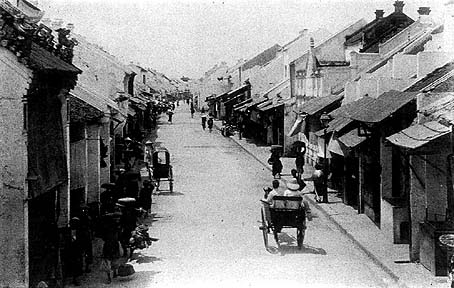
In the Old Quarter Hanoi’s rich past comes to life. Stroll down the ancient guild streets, where the wares on offer have remained unchanged for centuries: traditional medicines and herbs, brightly coloured votive paper, bolts of finely spun silk, silver and jade jewellery. 
Ten centuries of culture and commerce are layered like paint, creating a vibrant mural past and present. Here you will see the life of Hanoi: the women had pad past with baskets of bread perched on their heads; the flower vendors wheeling bicycles festooned with fresh-cut roses, mums and lilies, the brown-robed monks on their way to the pagoda.


As well as bring Vietnam’s political centre, Hanoi has long been the country’s artistic and cultural heart.  Visitors can explore the peaceful grounds and pavilions of the Temple of Literature, an ancient university where the first scholars enrolled in 1070.
Today, the city’s aura of culture continues to draw intellectuals and artists. Dozens of galleries showcase the fruits of a flourishing contemporary art scene.


This creative legacy is not surprising, given that Hanoi invites quiet contemplation. With its shady lakes and countless street-sides cafes, the city tempts you to linger over a cup of thick Vietnamese coffee and watch the world go by. 
Spend some time in Hanoi and you too will fall under its languid spell. Hanoi’s cloistered beauty hides Vietnam’s ancient soul.
Source: Internet

Bai Dinh Pagoda - Ninh Binh

Location: Bai Dinh Pagoda is located in Gia Sinh Commune, Gia Vien District, Ninh Binh Province, 12 km from Ninh Binh City, 5 km from Hoa Lu Ancient Capital, close to Trang An Tourism Area and 95 km south of Hanoi.
Characteristics: Covering a large area of 700ha, it is the largest pagoda complex in Vietnam with many records.

From the main entrance, the pagoda's magnificent three-door gate is the biggest of its kind in Vietnam, built with 550 tonnes of iron wood. The gate is flanked by two 5.5m-high solid bronze guard statues (Ho Phap), weighing 12 tonnes each and four pillars tower over the entrance is 13.85m in height and 0.5m in diameter each. Around the gate are eight smaller bronze statues of Kim Cuong angels, each weighing 8 tonnes.

After walking along the corridor of about 1 kilometer where 500 white-stone Arhat statues are placed two sides, there will be the bell tower with the largest bronze 36-ton bell that is hanging here. Each Arhat statue, 2-2.5m in high, 2-2.5 tonnes in weight, is carved from monolithic stone, need one month for completion and different from each other.
Going up is the 800sq.m Kwan Yin Sanctum - a wooden one-layer-roof building with five main chambers and two side chambers. In the centre of the sanctum is the stunning 10m-high bronze statue of Kwan Yin with a thousand eyes and hands. This 40-tonne statue is considered as the biggest Kwan Yin statue in Vietnam. 

The Phap Chu Sanctum - an imposing imitation wooden two-layer-curve-roof building - where a 10m-high bronze statue of Lord Buddha sits on his lotus throne situated. This 100-tonne statue has been recognized as the tallest and heaviest bronze depiction of Lord Buddha in the country in 2006 by the Vietnam Guinness Book of Records (Vietbook).

The Tam The Sanctum is located on a high hill at 76m above sea level. This is a majestic, grandiose building with three-layer-curve-roof style and an area of 3000 square meter where three bronze statues represent the past, present and future weighing 50 tonnes each placed.
Far from the large site about 2km is the place where the old Bai Dinh Pagoda located. Almost of all pilgrims and travelers want to reach there. Even this is not short way for walking, it is really a good time for people refresh while strolling. After a long way walk and contemplate around beautiful view, travelers will see a modest three-door gate locates next the roadside. Through the three-door gate, turn to the small path rather slope, go up about more than 200 steps to the top of mountain, an old pagoda appears in ancient and tranquil.
Bai Dinh Pagoda has been attracting a large number of pilgrims, domestic and international tourists. It is one of biggest works which is build to celebrate the 1,000th anniversary of Thang Long - Hanoi in 2010. This impressive complex is waiting for your discovery.

Tam Thanh Grotto - Lang Son City

Location: Tham Thanh Grotto is situated in Tam Thanh Ward, Lang Son City, Lang Son Province.
Characteristic: There is a poem by Ngo Thi Si carved on the grotto wall praising the magnificent natural beauty of the area.


Tam Thanh Grotto is one of the famous grottoes in Lang Son, lying west of Ky Lua Street. Its door is approximately 8m high, opening to a corridor with 30 stone steps carved into the mountain. There are dense groves hiding the grotto from the sun. Poet Ngo Thi Si (1726 - 1780) carved one of his texts on the grotto wall while he was a Mandarin guard in Lang Son.
The poem praises the magnificent natural beauty of the area, more specifically the sound of the water stream falling on hundreds of rocks, almost like a graceful murmur. Vong Phu Mountain, meaning "waiting for a husband," is located nearby. Here, one can explore a grotto with marvelous stalactites and a statue of Buddha.